Chimney repointing in Swindon costs £150–£800+ per stack depending on scope. Lime mortar (NHL 3.5) for pre-1920 chimneys, cement for post-war stock. Includes flaunching, cowl fitting and capping for disused flues. Scaffold included in all quotes. Call 0179 329 7084.
✓ NFRC Registered
✓ Fully Insured
✓ 10 Year Guarantee
✓ Free Quotes
✓ No Hidden Costs
Chimney Repointing
When Does a Swindon Chimney Need Repointing?
Chimney stacks are the most exposed part of any building — fully exposed to wind, rain, frost and thermal cycling from all four sides. The mortar joints between the bricks deteriorate faster than on sheltered walls. In Swindon, the plateau exposure at 120m accelerates this — chimney pointing on west-facing stacks lasts approximately 20% less time than on sheltered properties in nearby valley towns.
Lime Mortar vs Cement — Which for Your Chimney?
Pre-1920 chimneys — Old Town, Railway Village, Rodbourne, Moredon: NHL 3.5 hydraulic lime mortar. This is not optional — cement mortar on period brickwork causes serious damage. The softer historic bricks need mortar that flexes with thermal movement. Cement is rigid, cracks, and traps moisture inside the brickwork where it freezes, spalls the brick face, and accelerates deterioration. Post-war chimneys — all estates from 1950s onward: cement mortar is appropriate for the harder engineering bricks used in modern construction.
Flaunching, Cowls and Capping
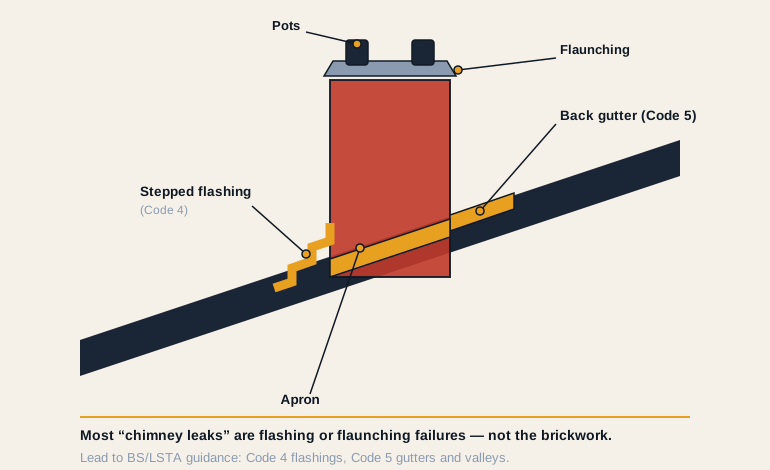
Flaunching is the cement or mortar bed that holds the chimney pot in place. It cracks and fails over time, allowing rain directly into the flue. We re-flaunch using flexible mortar that resists thermal cracking. Chimney cowls prevent rain entering disused flues while maintaining ventilation — essential to prevent condensation in sealed flues. Chimney caps seal the stack entirely for permanently disused flues, but only after confirming no active flue requires ventilation.
Swindon Chimney Exposure Patterns
West-facing and south-west-facing chimney faces receive the most wind-driven rain in Swindon and deteriorate fastest. On hilltop locations — Highworth, Faringdon, the western edge of Shaw — all four faces are equally exposed. In the sheltered valley locations — Chiseldon, Cricklade, Lechlade — chimney pointing lasts significantly longer due to reduced wind loading and thermal cycling.
Historic England Technical Advice Note recommends NHL 3.5 hydraulic lime mortar for all pre-1920 masonry. Cement mortar traps moisture in softer historic brickwork, causing accelerated deterioration, frost damage and spalling that is more expensive to repair than the original pointing (Historic England Practical Building Conservation: Mortars, 2012).
"Lime mortar repointing on our 1855 chimney stack. They raked out all four faces by hand — no angle grinders — and re-pointed in NHL 3.5 lime matched to the original colour. Conservation officer approved. Museum-quality work."
George P. · Railway Village, Swindon
★★★★★
"Full repoint on our 1960s chimney plus new flaunching and a cowl. £520 including scaffold. The weather face was completely bare — mortar had just fallen out over the years. Solid job, no more damp."
Pat H. · Penhill, Swindon
★★★★★
"Flaunching cracked and the pot was wobbling. They re-flaunched in flexible mortar and fitted a rain cowl. £180. Quick, clean, effective."
Nigel F. · Old Town, Swindon
FAQ
Frequently Asked Questions
£150–£800+ per stack depending on scope. Three-course repoint on the weather face: £150–£400. Full four-face repoint: £400–£800+. Scaffold included in all quotes. Prices reflect the southern England labour band. Conservation area properties in Old Town may cost 20-40% more due to like-for-like material requirements.
Lime mortar (NHL 3.5 hydraulic lime) for all pre-1920 masonry — chimneys, ridges, verges and pointing on period properties. Cement mortar for post-war construction with harder engineering bricks. Using cement on soft historic brickwork traps moisture and causes frost spalling, accelerating deterioration. Historic England's Practical Building Conservation guidance is explicit on this. See our repointing service.
Mortar debris in the gutters. Visible gaps in the pointing from the ground. Damp patches on the chimney breast inside. Loose or wobbly pots. Historic England recommends NHL 3.5 hydraulic lime mortar for all pre-1920 masonry. Cement mortar on period chimneys in Old Town and Railway Village causes accelerated deterioration.
Scaffold is included in every quote that requires it — never charged as a surprise extra. Many repairs can be completed safely from a ladder. For roofline, chimney and re-roof work, full scaffold is erected to HSE work-at-height regulations.
If the flue is permanently disused and no ventilation is needed, capping prevents rain entry. We assess each flue before recommending capping to ensure active flues are not sealed. Historic England recommends NHL 3.5 hydraulic lime mortar for all pre-1920 masonry. Cement mortar on period chimneys in Old Town and Railway Village causes accelerated deterioration.
Natural slate: 100–150+ years. Clay tiles: 60–100 years. Concrete interlocking: 40–60 years. GRP flat roofing: 25–30 years. EPDM rubber: 20–25 years. All lifespans assume correct installation with corrosion-resistant fixings and adequate ventilation. Source: NFRC Roofing Materials Guide. See our lifespan guide.
Scaffold is included in every quote that requires it. We never charge scaffold as a surprise extra. Typical scaffold hire for a domestic re-roof: £400-£600. For roofline and repair work, tower scaffolds or podium steps are used where safe and appropriate.
We have worked on chimneys across Swindon for 20 years and the exposure pattern is clear. West-facing and south-west-facing chimney faces deteriorate fastest because they bear the brunt of Atlantic weather systems. On the exposed western estates at Shaw and Toothill, chimney pointing lasts approximately 20 years before requiring attention. On sheltered eastern estates at Covingham and Eldene, the same mortar specification lasts 25–30 years. Period chimneys in Old Town and the Railway Village with lime mortar pointing have a longer cycle — 30–50 years between repoints — but the lime mortar must be correctly specified to achieve this. Cement mortar incorrectly applied to period chimneys fails within 10–15 years AND damages the underlying brickwork. We have repaired many chimneys in Swindon where previous cement repointing has caused spalling, frost damage and accelerated deterioration that would not have occurred with the correct lime specification.
Further Detail
Repointing Method — Why Hand Raking Only
We rake out old mortar to a minimum depth of 15–20mm using hand tools only. We never use angle grinders on chimney repointing. Angle grinders cut faster but they also cut into the brick edges, creating wide, feathered joints that hold less mortar, retain more water, and fail faster than properly raked joints. On period brickwork — which includes all of Old Town, the Railway Village, Rodbourne and Moredon — angle grinder damage to soft historic bricks is irreversible and significantly devalues the masonry. Hand raking takes longer but preserves the brick arrises, creates a clean joint of consistent depth, and allows the new mortar to bond properly to sound masonry rather than damaged surfaces.
Chimney Damp — Multiple Causes, One Diagnostic Process
Damp on a chimney breast is not always caused by failed external pointing. Three other causes produce identical symptoms. A cracked flue liner allows condensation from the flue to penetrate the chimney from inside. A failed lead flashing allows rain entry at the roof-to-chimney junction. Condensation in a sealed unused flue creates moisture with no external source. We diagnose the actual cause before recommending work. Repointing a chimney that has a cracked flue liner will not solve the damp regardless of how good the pointing is. Our chimney inspection checks all four potential causes and recommends the correct fix for the specific problem found.
About Us
Our Commitment to Swindon Homeowners
Twenty years of continuous service to Swindon homeowners means we have fixed roofs on every type of property in every neighbourhood. We have seen every roofing problem this town produces — from the nail sickness crisis on the post-war estates to the listed building conservation work in Old Town and the Railway Village. We know which materials last in Swindon's exposed conditions and which fail prematurely. We have a reputation built entirely on doing good work at fair prices — no advertising, no cold calling, just honest workmanship that speaks for itself. We are NFRC registered, carry five million pounds of public liability insurance, and provide a written 10-year workmanship guarantee on every job. We do not subcontract and we do not employ commission-based salespeople. Our own experienced team handles every project from the initial survey through to completion and sign-off. Call 0179 329 7084 for a free, no-obligation survey and quote.
Here is how to tell if you need this service — and when you might not.
Visible damage or deterioration from the ground
Water ingress or damp appearing inside the property
Previous repair showing signs of failure
Material reaching end of expected lifespan
When it is not the answer: If the problem is minor and localised, a targeted repair may be more cost-effective. We assess honestly during the free survey.
Most chimney damp is flashing or flaunching failure, not the brickwork.The process
What to Expect
1. Free Survey
We inspect the relevant roof area, photograph everything, and explain what needs doing.
2. Written Quote
Itemised specification with materials, labour and access costs clearly separated.
3. The Work
Our own team carries out the work to specification. Daily cleanup, weathertight each night.
4. Sign-Off
Walk-through, 10-year guarantee issued, site cleared.
Timescales
How Long Does It Take?
Job
Typical duration
Minor work
Half day - 1 day
Standard job
1-3 days
Complex / large scope
3-5 days
Weather dependent — we never compromise quality for speed.
Access
Access, Scaffolding & Permits
Access method depends on the specific job — ladder, tower scaffold or full scaffold. Always itemised in your quote. Scaffold is specified for: work above single-storey height, multi-day jobs, chimney and ridge access — always itemised in your written quote, never a hidden extra.
Pavement scaffold and skip permits go through Swindon Borough Council. On restricted streets in Old Town, the Railway Village and parts of Rodbourne, we coordinate access to minimise disruption. Allow a few working days for permit processing.
Guarantee
Your Guarantee, Explained
All work carries our written 10-year workmanship guarantee. Materials carry separate manufacturer warranties on top.
Covered: workmanship for 10 years, in writing, transferable if you sell.
On top: manufacturer warranties on materials (terms vary by product).
Not covered: storm or impact damage — that is an insurance matter, and we document it for your claim.
If a fault appears in covered work, we come back and put it right. No quibbling, no re-charge.
Good to know
Disruption, Mess & Weather
External work during standard hours. We sheet below and clean up each day. You do not need to be home. You do not need to stay home for external work — we just need access agreed in advance.
Work runs year-round where conditions allow. We build weather margin into every schedule and never leave a roof exposed. Swindon's exposed plateau at 120m produces more frost days and stronger gusts than sheltered valley towns — we factor this into every schedule.